
Growing roots in your kitchen garden can be intimidating. I mean, what are those plants doing under the dirt anyway? And how do you know when they've finished doing whatever it is they're doing?


The truth is that root crops like beets or carrots can take their sweet time to grow to a size that's worth harvesting. And if you've never pulled a beet out of the ground a wee bit too soon, then you just haven't been at it long enough yet.
But if you want to be as certain as possible that it is, in fact, time to harvest your sweet beets, here's the "official beet test" from our Gardenary kitchen gardens to yours. The test consists of five simple steps.
Are you ready for this?


step one
Clear the soil area around the base of one or two (or three) of your beet plants


step two
Without uprooting the plant, take two fingers and make a circle around the base of the beet plant. Apply pressure until you can feel the top "shoulders" of the beet. Expose the top 1/3 of the beet if possible.

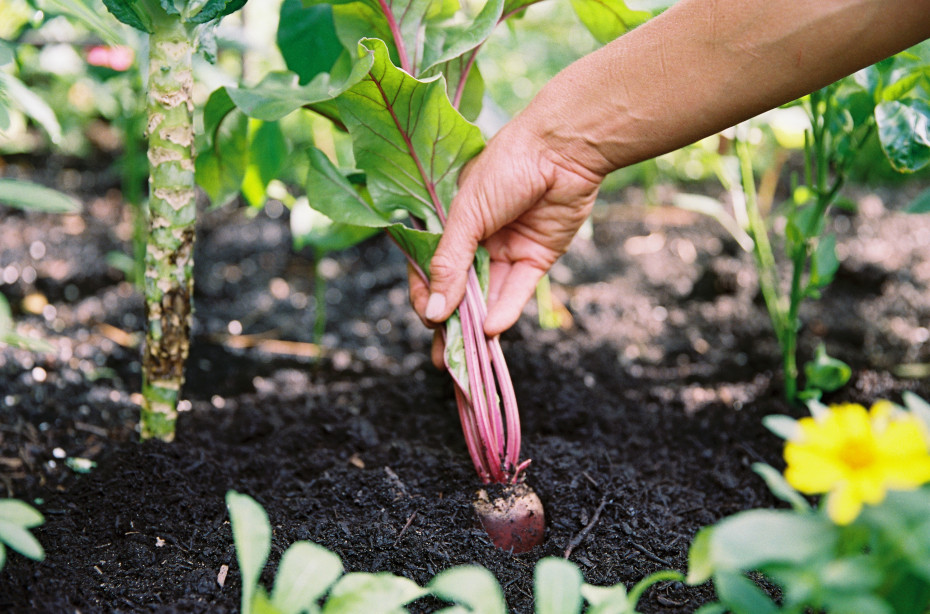
step three
You make the call. If the beet is wide and large enough for your preferences, use your hands to tug on the top leaves of the beet plant and slowly uproot it.
If the beet seems too small for harvest at this point, gently push compost and soil back over the shoulders of the plant and give a light watering in. Wait a few weeks before testing for more growth.
Harvest beets when they're smaller than those you buy from the grocery store, and you're guaranteed a sweet harvest.


step four
Don't stress!
Did you pull one up too soon? No worries. Beet greens are actually edible and so good for you! So eat up.
Did you leave one in the ground too long? Also not a problem. Just give it a nice bath in olive oil and salt, and bake it low and slow in the oven.
Generally speaking, it's best to harvest vegetables from the kitchen garden a little smaller than you would find them at the grocery store. Kitchen garden varieties are different than the grocery varieties that are grown to endure long storage and lots of trucking. So enjoy your beets on the smaller side for the best flavor and quality.


step five
Congratulate yourself! You're growing beets.
Roots are actually the third step in learning to set up and grow a kitchen garden. So if you're already growing beets, you're clearly on your way to becoming a kitchen garden pro.

Take Our Green Thumb Quiz
We'll help you find your kitchen garden type and direct you to resources that will help you know what plants and type of garden you should grow next.